As one does, from time to time, when time itself doesn’t appear pressing, or when one is just undisciplined in the moment, I found myself glued to an hour and a half video conversation between Ezra and Naomi Klein. The latter Klein, no relation to the former, was talking about the author, journalist, political theorist and agitator, Naomi Wolf.
The two Naomis are of a similar age and profession, and in the 1990s, they came from a similar place in the American political spectrum. It would be fair to describe them then as from the intellectual feminist left. However, they no longer share a political home. Naomi Wolf has evolved to be a rather MAGA-oriented propagandist of the conspiratorial right.
The topic of the 90-minute video was an analysis of how and why Ms. Wolf evolved. But Ms. Klein also discussed the significant professional problems she has encountered by people being confused about which Naomi they were talking about. Naomis Wolf and Klein had become, over the years, doppelgangers in the minds of many, even as their politics increasingly diverged.
Which got me to thinking about the notion of individual uniqueness. Do you, dear reader, believe you have met anyone much like me? And I in turn ask myself, have I met anyone whom I thought of as my doppelganger?
My short answer is “no.” I have never met anyone whom I would find to be uncannily similar to my world view and to my personality.
But then I thought of my family and friends. Everyone feels fully unique. Dozens, hundreds, yes, thousands of people who have come in and out of my life all feel amazingly distinctive. Wonderfully distinctive.
Is that your experience? Is it your experience that the more we get to know any other person, the more we realize that there may be over eight billion humans on this planet, but every one of them is unique. And it’s not even close.
Naomi Klein certainly took some professional hits due to the mistaken doppelganger Naomi Wolf. But in studying Wolf’s evolution, Klein got some grist for her latest book on just how to explain these strange and dangerous political times.
I was searching for a particular document on my electronic storage site, when I came across the below piece I wrote more than 5 years ago. It was written for Keith Eisner’s writing class relatively soon after I had retired. For those who are also recently retired, does the below ring a bell?
Week 1: Preparation
Now that my work life has come to a satisfying close, and the accolades from former colleagues for a job well done has wafted long enough across my proud brow, it is essential to set clear short, medium and long-range goals for the rest of my life and see each day as a grand opportunity to advance those goals. Self-discipline is essential. So here are my commitments:
For my body, I will exercise every day. Stretching and warm-ups always must start the ritual. No fewer than 10,000 steps. 45 minutes of cardio. Exertion of all muscle groups.
For my mind, I will write a journal entry or other longer piece of writing each day. No exceptions. A minimum of 2 hours of free-flowing prose, with longer academic or professional pieces added based on timely ambition.
For the community, volunteering to help the needy or advance society in some fashion. 10 hours per week, minimum.
For family, I will cook and clean and support the household every day. I will always ask how my wife is doing and think about how I can improve the quality of her life as well as the lives of our children. Every day.
For recreation, I will take up guitar, improve my table tennis game, join a choir, and travel the world. I will attend to the lives of my friends, invite them to participate in grand occasions and grow closer to them in our shared lives.
Week 2: Execution
The stretching in the morning was so affirming, and the beautiful walks during the warm summer mornings made 10,000 steps a breeze. Heck, on Thursday, I even made 14,342 steps! I found that I really didn’t need to go the full 45 minutes to get my steps in. 30 is fine. How unfortunate that I strained my shoulder on Wednesday. Ouch… need to take it easy there.
I sure love to write! I did miss Tuesday’s journaling because Joe needed help with his yard. It probably is important to stop writing on shabbat, so Friday and Saturday will be no writing days. There are priorities to balance.
I’m sorting through 5 different organizations that could use my volunteer help. Several look promising. I’ll interview them next week.
I made 5 dinners and 3 lunches this week. Boy that was fun. My wife wanted to make other meals, so I let her. Nice shared work. Cleaning up was a breeze. But it’s only fair I share the duties on that as well.
Research on travel options was a gas. So many choices! Joined the choir. Looking into guitar teachers.
Week 3: Realization
Sprained my right leg. In a cast. Great for upper body strength but need to take it easy in the future. Doctor says 6 weeks before I can begin a steady regimen of walking.
Hmm… what to write about? I think I need to watch more TV to get ideas. Thank goodness the impeachment hearings are going on. So mesmerizing and the human condition is on insightful display. Much to write about there.
When I volunteer my time, I need to be sure I support what an organization is doing. After looking into the 5 organizations last week, I found serious fault with all of them. Need to investigate others.
Hard to cook and clean when you can’t easily walk around. My wife has graciously agreed to take on more of those household chores, and we have found great take-out options.
My friends and I talk about impeachment on the phone. We really agree with each other. How gratifying.
Week 4: Disillusionment
The flu has done me in. Fluids and rest, fluids and rest.
The world is bleak. Trump will never be convicted. Why write? I’m not a good writer anyway, It isn’t like there is a paucity of book writers who are better than anything I could ever produce.
I’ve concluded that you cannot really help another person. Volunteer for the needy? Any help one provides is just enabling their dysfunction. Better they live their lives and I live mine.
My wife is sick of cooking and cleaning and sick of me. I don’t blame her. What good am I anyway?
As for friends, who needs them? They only gripe that I am not the same man they’ve known for all these years.
You know, after I get over the flu, I’m wondering if they’d take me back at the morgue. It was a great job with super benefits, and we were always cracking the best jokes.
In the immediate past blog entry, titled Memories of Sarah, the city of Berkeley featured prominently. It was a critical place in forming my character as well as my son Zac’s.
Virtually everywhere I went and everyone I talked with on my recent visit triggered connections to that history. Uncle Joe used to talk about “the original Peet’s” coffee house, which was located three blocks down Vine Street from his Scenic Avenue home. So, what should I see along Oakland’s International Airport corridor? A video exalting the history of Peet’s.
A video capture at the Oakland Airport, November 2025.
Every visit to Berkeley inevitably hits my soul as a memorial pilgrimage. I connect with people and places because through those connections I find myself closer to wholeness.
I’ll continue now where my personal Berkeley history left off from the last blog entry before we move forward to the events and impressions of November 2025.
Student Life at Cal
During my two years at Cal, I saw Sarah and Joe frequently, but in some ways less often than one might have thought. School was a heavy load, and I had a full social life, at first living in Berkeley Student Housing Cooperative dorms, and later in a group house on Ashby Avenue, far across town from the Jaffes.
It was through my student programs at Berkeley, that I did get to know the city more intimately. Afterall, I was in a city planning program! Classes in school included socioeconomic analyses of Berkeley neighborhoods and an urban design concept assignment for downtown Berkeley.
In the latter class, taught by Donald Appleyard (https://en.wikipedia.org/wiki/Donald_Appleyard), my horrible graphic skills were employed on an idea that I thought pretty terrific. I recommended that awnings be a theme on a certain Shattuck Avenue block. I thought awnings would both unite the street design thematically and provide functional value during rainy weather.
Professor Appleyard, whose academic focus was urban design in general and street design in particular, had a British stuffed shirt mien about him (he was, actually, British after all), and in our design class he was being critical, with studied deliberation, about every student’s product. We were all a bunch of policy wonk-types, not graphic artists. As the good professor went from one student’s production graphic to another, he came around to look at mine.
“The awning slopes are inconsistent from business to business. And the color scheme,…” he began to say before I interrupted him.
“I know I can’t draw worth a hill of beans, but what about the concept? Do you think it has merit? Can you respond to that, please?”
To which the entire class erupted in applause. They all appreciated my gumption.
Appleyard, who wrote a book called Livable Streets, ironically died in a traffic accident two years after that Cal awning critique episode.
Which reminds me of yet another of my academic chutzpadik rebellions which somehow has stayed with me for 45 years. Toward the end of our last quarter, Professor Marty Gellen, who was younger and a bit cooler than other profs, was going on about one failed policy after another. I finally had enough.
“Marty, we have been here for nearly two years, and we have been exposed to the failures of multiple federal, state and local policy prescriptions. Can’t you tell us about one thing, one single thing, that you really believe has helped solve a problem or two?”
At that, Professor Gellen smiled broadly, pausing to consider my challenge. He then weighed in with a series of ideas cum regulations and other implementation techniques that he said made a real positive difference.
The room erupted in applause.
“Thank you, Marty,” I responded. “That was most helpful.”
Visits Home
It took me an extra 18 months after physically leaving school in Berkeley to actually finish my course work and get my degree. That challenging period is a topic for another blog entry. Or set of them. But in the years following Cal, I started my professional planning career at the City of Seattle and Island County Planning Departments, got married, had a son, and got divorced.
I wrote about my and Zac’s connections with Aunt Sarah and Uncle Joe during the period after my divorce in Memories of Sarah. It was a time when Berkeley very much began to feel like home, for my connections were not solely familial.
Zac and I would also regularly visit my Cal student friends Helen, Katrina, Mark and Janet. Especially Helen, whose home we would occasionally stay at. She had been an elected official with the East Bay Municipal Utility District and later served on the Berkeley Planning Commission. Janet, Katrina and Mark also had at various times planning jobs in the area. Berkeley’s political and policy affairs were regular topics of our conversations.
I found myself in town almost every year at least once. And those visits too had a pattern. At Sarah and Joe’s, we had TV obligations and certain restaurants to patronize. Sarah and Joe rarely cooked anything at home. I would take long walks in the North Berkeley hillsides. Playing softball on Sundays with Ray Weschler at Codornices would yield, as I got older, to mere observation. But I still to this day read his wildly entertaining game summaries. I would also visit with friends and family.
And I would always walk over to Cal and read the class descriptions on the wall of the Department of City and Regional Planning. The evolving nature of the profession – my profession – always provided insights. And it was just fun to stroll leisurely across the beautiful campus and see the scenes of youthful academics in motion.
The above visitation pattern took place for over 30 years. But predictably, time took its toll. First Uncle Joe died then Aunt Sarah. Helen sold her home and moved to a senior retirement community in Oakland. My connections to Berkeley were ebbing.
And then a happy event intervened to make Berkeley once again a central place in my heart. Zac got a job as Managing Editor of Berkeleyside, the principal local online new source in town. His partner Vicky got a job as an art curator at the Berkeley Art Museum and Film Archive (BAMFA), and they moved into a lovely little house in Berkeley’s Poet’s Corner neighborhood. Then they decided to get married and our two families celebrated the nuptials at a gorgeous winery in Sonoma County. The next year they gave us the glorious news; Vicky was pregnant with a boy, later to be named Alden.
21-month old Alden is growing so quickly and this is such a precious chance to bond with him. Jean and I have decided that we would like to be with our Berkeley family at least bimonthly if we can pull it off in the coming years.
December 2025
Zac, Vicky and Alden flew up to Seattle during the Thanksgiving holiday week. They stayed a few days with Zac’s mom and shared some post-Thanksgiving meals and walks and talks with our side of the family. It was in Seattle that Alden coined the name Gigi for Jean and “Hodo” for me. Nobody knows why I became Hodo. We were trying for Saba (the Aramaic name for grandfather that is widely used in Israel). But he had trouble with the “S” pronunciation at the beginning of a word. So… Hodo it is… at least for now.
Here they are in front of the Troll in West Seattle’s Lincoln Park.
Vicky had work to do in New York immediately after the holiday, so Zac invited me to come down while she was away to spend a week in Berkeley with him and Alden. Vicky would join us for the last day + of my stay.
The plan was for me to help Zac out a bit by strolling Alden to his childcare center, picking him up at the end of his care day, and spending evenings together. I would do a some cooking and childcare myself with my grandson, all in the interest of helping Zac out – but really any time with Alden was a pure joy.
That left most of every day that week available for my Berkeley walking adventures. And what a pleasure it was to escape the gloomy soggy dark days of an Olympia December, for a week of sunshine and highs around 60. Perfect for exploring the city’s classic haunts.
On Sunday, Zac, Alden and I went to Tilden Park and tried out the Merry-Go-Round. I think Alden was a bit unnerved by the ups and downs, but he held on fast and eventually had a good time.
On Tilden’s Merry-Go-Round
Back home, there was plenty to do. In particular, Alden was an extraordinary builder with the erector set called MAGNA-TILES.” This blog is not exactly a commerce marketing site, but these things are SO FUN. And the kind of deliberation they have produced in Alden is just magical to behold. Zac loves it too!
In the midst of creation.
Alden also loves to draw. Hodo helps with small circles.
Sunday was also shopping day, as the three of us went to Berkeley Bowl to provision up for the week. I made a heavy seafoody meal of salmon and scallops for dinner and settled into my couch bed for the evening.
Monday was a major change in pace and location. After dropping Alden off at childcare, I briskly walked over to the North Berkeley BART station and caught the train down to its southern terminus in North San Jose. Waiting for me there was my cousin Shirley Lee.
I met Shirley, and her kind, adventurous and delightful husband Dan, less than 10 years ago at the family Antolept reunion in New York. She is a relatively distant relative (perhaps a 2nd cousin with some removal involved), but we just kind of bonded right away, and Jean and I have seen her and Dan a number of times recently. Dan, who was amongst other things, an absolute train enthusiast, sadly just passed away in the last year. So, the visit with Shirley was a kind of third leg in my recent connections with folks who have freshly lost their spouses. Michael and Kathy were the other two, who I described in a recent blog entry during my trip to New York.
Shirley’s approach to this loss involved, among other things, diving into those parts of her life she enjoys. She paints. She travels for learning. She stays involved with family and temple. She plays Mah Jongg (Jean is now an addict). Well, playing Mah Jongg is too plain a name for her involvement. She has been an expert Mah Jongg teacher for decades. So, my relatively short visit with Shirley included not just a nice lunch out at a local pub, but a 20-minute lesson in Mah Jongg. Bams, Dots and Cracks y’all. I was exposed enough to get the basic drift of the game.
A thirty-year-old newspaper clipping proves Shirley’s merit.
On Tuesday morning, I brought Alden to childcare. He has advanced from the Caterpillars group of babies to the Crickets group of toddlers. The latter group is composed of 18+ months old walkers to the time they can be toilet trained. I took the opportunity to hang around for a while and see how the place operated.
They organize the day into clear and consistent segments. First free play. Followed by snacks. Followed by diapers. Followed by more free play. Followed by naptime. Followed by group activities. Diapers, naps, meals… they are all choreographed. And the caregivers seem wise, patient and loving with the toddlers. Along with Alden’s parents and grandparents and play friends, he is surrounded by love, and at his age, he really can do nothing wrong. Mischievous yes. Wrong no.
I so enjoyed just hanging out at the center. At one point, I started to read a book to Alden and five other rapt toddlers joined in, eyes wide open, hanging on every word spoken and every picture to be seen. Hugs offered by them and accepted by me.
Leaving Alden for the day is another matter. On the first day, the staff recommended that I just quietly leave. He saw me do this and started crying. Vicky recommended that I tell him that I am leaving, give him a big hug and say bye bye. The latter strategy was not only more honest but worked better. Alden said bye bye to me too and we waved at each other.
Below is a picture of one childcare scene:
Buffa with her charges.
After dropping Alden off, my first stop on a beautiful fall stroll was Saul’s Deli on North Shattuck. Even though Aunt Sarah was frightened about antisemitic attacks at this famously Jewish-style restaurant, I yearned to plant my tuchus firmly on the back bench and read a book while downing matzo ball soup and a pita sabich. Of course, in Berkeley nothing ever goes according to plan.
“So, you like books,” my elderly neighbor observed, calling out to me.
“Well, yes,” I replied.
It was kind of obvious since I was reading one, but that wasn’t the man’s objective. He and his wife had just sat down, and he wanted conversation.
“What are you reading?” he inquired.
“Stalking Elijah,” I replied. My book was an exploration of modern Jewish interpretations of the mystical tradition.
“You know, I have some books you just have to read,” was his response.
“First of all, I’m a very slow reader and it is taking me forever to get through this book. And we have just met. How do you know that these other books are so vital for me at this stage of my intellectual and spiritual development?”
“You’re funny. I like you,” he responded, and then went on to describe each book. The first was Strength in What Remains by Tracy Kidder. The second, Revenge of the Tipping Point by Malcolm Gladwell. “But you know, this third book is what you REALLY need to read. It’s Outlive: The Science and Art of Longevity by Dr. Peter Attia.”
“OK,” I started my reply. “First of all, who are you and what credibility do you have in making these recommendations.”
Turns out that he was Ralph Greif a retired Mechanical Engineering prof at UC Berkeley. His wife Judy would occasionally roll her eyes as he and I went on for a while trading quips, shrugging with Yiddishkeit, and challenging each other’s assumptions and predilections. She was, as they say, used to it. She was also, as it turned out, an architect and graduate from the same UC Berkeley College of Environmental Design that I attended 45 years ago.
“He does have his opinions,” I remark to his wife, “but I bet you love him a lot.”
“Yes, I do,” she responded. And Ralph added that he loved her too.
I promised I’d send them my blog entry of this encounter if he emailed me the book references. The hatched deal will soon be sealed. And by the way, the matzoh ball soup was only so-so but the sabich was extraordinary.
After Saul’s I picked up a variety of rich and flavorful scones (Juani loves their scones) and some cheese at the Cheeseboard Collective and stocked up on lactase pills at the local CVS, my favorite place to get the brand I want. My “rounds” of North Shattuck remind me of Sarah’s preference to get postage at the El Cerrito post office not the Berkeley post office because they had the best prices.
The Wednesday midday treat was a walk in the East Bay Municipal Utility District’s watershed protected lands with my friend, fellow Cal student, and former EBMUD commissioner Helen Burke. I had earlier dropped Zac off at a meeting location in downtown Oakland and Zac lent me his car for the day. After meeting up with Helen at her residence, we drove up to the crest of the Berkeley Hills along Grizzly Peak Blvd. There, we pulled over to an unremarkable widening off the road, got out and started our walk along a narrow trail that wended its way downward toward views of Mt. Diablo and into the grand watershed lands of the East Bay.
Helen, it turns out, has been on a mission for several years. She wants to keep mountain bikers off of the pedestrian-only trails that currently weave their way through the watershed. Compromises have been sought and found, providing some bike access to the wider service roads.
Here’s Helen, guarding the sanctity of the single-track from bikers. Lance in hand.
Later, we sat down for lunch at Helen’s retirement complex. An old dude at the neighboring table hears us talking about Judaism and Israel. He can’t help but stop by to provide us with his two cents. Turns out Helen’s retirement neighbor used to worship at the same shul on University Ave as Frank Greif (Of Saul’s fame). Both of them assured me that they don’t actually believe in all the hocus pokus, but they still financially contribute to the temple.
On Thursday, my stroll took me from the Elmwood District where Zac dropped me off (he needed to pick up some chocolate as a gift for an event he was about to attend), to Boalt Hall, where Cal’s law school is housed. On the exterior of Boalt Hall there are two enormous metallic plaques, one with an Oliver Wendell Homes quote and the other with a Benjamin Cardozo quote, both men towering Supreme Court figures of their times.
Oliver Wendell Holmes view of the law as leading us away from savage isolation.
Below the plaques there lies a small patio with a series of round tables surrounded by affixed rotating chairs. I sat down to do a bit of emailing on my phone at one of the tables, and next to me were two young women, one sitting down and the other standing. I couldn’t help but overhear them talking about getting drunk that last Saturday, their plans for the next night, and some detail about legal interpretation.
As they were about to leave, I said “Excuse me, but are you two law students?” They smiled and said they were. “Would you mind if I asked you a question?”
They nodded their heads and said, “no problem.”
“Given the upheaval in the last year about so much of what was seen as settled Constitutional law, including challenges to due process and executive authority and the like, do you students in law school talk about these pretty radical times for the law? And are there discussions in classes between students and professors on the topic?”
The woman who had been sitting down responded, “Yes, we talk about those things.”
“Well, then, how do you cope with all those changes? How do you think about the rule of law and the role of law given all that?”, I asked.
Her response was short and clear. “What do I think? I think you don’t give up.” And with that, she smiled and walked off with her friend.
Adjacent to Boalt Hall is the ugliest building on the Cal campus, which, of course, is where the architects learn their trade. Wurster Hall, the appropriately named home of the College of Environmental Design, is where I got my Masters degree 45 years ago. It was built in the Brutalist style. An apt name for a genre if ever there was one.
Just about every time I have returned to Berkeley since my graduation year, I have walked to Wurster Hall, climbed one flight of stairs up to the Department of City and Regional Planning’s office area, and read all the Department’s course descriptions. It has provided me with a sense of what the evolving interests and focal points are in the field, at least as seen by one elite institution. It has also provided an ever-increasing feeling of detachment and even alienation from the concerns of the department’s faculty and students.
In looking at this Spring’s course schedule (see photo below), every class presented itself as a case for what could be attacked as “wokeness” incarnate. The details of even standard statistical analysis courses use language and terminology that focus on group gender, ethnic and racial oppression.
Graduate curriculum at DCRP 2025-26
Ok, I’m probably overdoing it with the “woke” analogy, but there were actually no working men’s bathrooms in the first two floors at Wurster Hall. There were women’s bathrooms and non-gendered bathrooms. I had a case of urinary alienation.
Here’s a few pics of the lively and beautiful Cal campus, as I wended my way home to Zac, Vicky and Alden’s house.
On the way to Sproul Plaza… some sidewalk repair is in order.
Sather Gate bridges Strawberry Creek at the entrance to and exit from Sproul Plaza.
I had never noticed that Sather Gate was adorned with naked ladies.
Walking down and along Strawberry Creek.
Lots of English Ivy and a star of David.
That evening, with Vicky back from her trip east, the four of us went to dine at Middle East Market on San Pablo Avenue. Not only was the meal absolutely sumptuous, but I had never seen Alden put away that much food. He loved the bahp (Korean for rice), but also chowed down on goat meat, hummus and flatbreads.
Mama’s home!
On Friday, all three of the adults in the household had work to do. And in the evening, Zac and Vicky took off for a social visit, so I got to babysit Alden. I wasn’t thrilled with the diaper cleaning task – though Alden was most cooperative actually. But I particularly liked the process of putting him to bed. We read books, hugged a bunch. And when I leaned over and gently placed him in his crib, I took the time to rub his back and sing lullaby songs for a fairly long time until he fell asleep without so much as a whimper. It was an intimacy that brought me back 37 years to my time with Zac.
Saturday was bye bye day. After breakfast, we drove up to Vicky’s BAMPFA office. The four of us walked across Oxford Street to visit Cal’s Redwoods.
Three generations of Farbers by Cal’s Strawberry Creek banks.
Upon our parting with Vicky, the three of us strolled and walked back home. Along the way, we stopped off at the Berkeley Farmers Market and were entertained by venders and musicians.
Music at the Farmer’s Market.
It wouldn’t be Berkeley without notices at gatherings.
Or along the street on the walk home.
And for no other reason that pure joy, I’ll end this blog with a couple of pictures of my precious offspring.
I am in the midst of writing a blog entry about my connections with the city of Berkeley, linking my own youth to a recent visit with Zac, Vicky and grandson Alden. For research and memory purposes, I went back to look at a eulogistic piece I wrote near the time of my Aunt Sarah’s death in 2019. The piece captures well my emotional connection not only to Sarah and my Uncle Joe but to Berkeley as well. You can read it below as prologue to the next blog entry I intend to post soon.
Memories of Sarah
Sarah was a reluctant participant in technological change. Wait. Reluctant is too weak a word. Resistant? Luddite-like? Indignant? Yeah, that’s a closer fit.
“I will get a push button phone only when I cannot reach Kaiser with my dial phone,” she insisted. Eventually she had to get the tonal phone.
It is at least ironic then that it took the Internet to easily answer one of her core puzzles in life: What are the real words to the One Day at a Time theme song? It sounds like “wop on deet.” The answer, which really isn’t the important part of this story, is “up on your feet.” I read the lyrics on You Tube and listened to the theme song again and again. Still sounds like “wop on deet.”
Aunt Sarah died on August 21, 2019 at the age of 85. Never met anyone remotely like her. The arc of her life took her to extraordinary places and connected her to talented and accomplished people. And she was brilliant and creative and loving and thoughtful of others and self-limitingly fearful and quirky[1] to her core.
Sarah was born on the Upper West Side of Manhattan, to an MD father and supportive wife. She had a big brother who emotionally abused her, terrified her (“Maybe you’ll wake up in the morning, or maybe I’ll kill you in your sleep.”), and in general made her childhood home a torturous memory. Yet the neighborhood itself held its treasures and protections as a place to escape from familial dangers. She told stories of Mrs. Zabar (of Zabars Deli fame) giving young Sarah free sweets, and smiled while remembering winter days with friends, ice skating in Central Park. Her father made house calls in the neighborhood and his lovely, quiet daughter drew reflected respect and appreciation from his patients.
As she went through puberty, her extraordinary beauty provided – as they do for the beautiful – opportunities and risks. She became a high-fashion coat model. Sarah told the story of her Jewish boss protecting her from the clutches of predators by saying “Don’t touch that one. She’s a landsman,” which referred to Sarah’s Jewish heritage. Yet, Sarah was not only secular and unlearned about that heritage but actively irreligious, demurring from any focus on her ethnicity.
Sarah the coat model
She married at age 17, principally as she told it, to get away from her frightening brother. Her husband, Marvin, was in the theater industry in New York. She got hit on by Walter Matthau – and others whose names haven’t lasted the ages – and was highly uncomfortable with the socially prominent in-crowd. Much the introvert, she decided to divorce husband number one. While attending a musical performance, an acquaintance of Sarah’s, Joe Jaffe, asked her how Marvin was doing. “I don’t know for sure,” she replied. “I’m going to leave him.”
“Well then, I’m moving in on you,” Joe stated matter-of-factly. Sarah recalled this event with bemused awe. But Joe’s overture evidently met with Sarah’s approval. They were married for 60 years.
Joe too was in the entertainment field. At least for a few years. He played banjo and became a virtuoso with the instrument just at the time the post-war folk music movement in New York’s Greenwich Village was taking off. He played with Peter Seeger and Woody Guthrie and other folk luminaries. Pete gives credit to Joe in his classic book How to Play the 5 String Banjo for teaching him a thing or two.
Joe was a caller for square dances, a session instrumentalist during jams, but never a major soloist. He was asked to join “The Weavers” folk music group as they were forming but turned them down to pursue higher education. But not before – he claimed – teaching them an Israeli song he heard, Tsena Tsena Tsena, which the group converted into a smash popular hit (# 2 on the Billboard charts) in 1950[2].
Joe eventually became a chemical engineer, working for Standard Oil of California at its Richmond refinery. A creative, if unorthodox, catalytic chemist (he tended to go with “hunches” which often proved correct), we are left with over 30 patents in his name. But the draw for Sarah originally was not his scientific expertise, but the joyousness with which he performed both the banjo and the guitar, and, apparently, as she endearingly recalled, his thin yet shapely legs. I think she found that he also had a sense of assurance that appealed. He didn’t seem fawning over her. And he was her competitive match in the quirkiness department (and well beyond her capacity for cringe-worthiness!).
Sarah loved to tell what became classic Joe stories. The only student in the history of the program to fail the “Factory Trips” class at engineering school (he refused to turn in a write-up of his trip). Saying “Ah, so!” to the waiter at the Chinese restaurant. Stubbornly refusing orders from exasperated military authorities during the Korean War, which led them to keep him out of reach of any soldier other than during his entertainment gigs (he led music performances for the troops). Collecting tool kits at garage sales, not because he needed any more tools, but because they were such deals. Keeping an abundant collection of tapes (Scotch, electrical, and the always useful duct), that somehow marginally held the plumbing and wiring together. Heaven forbid one actually calls a plumber and upgrades the damn house.
The couple relocated several times, following paths to a series of Joe’s engineering jobs. From New York to New Jersey to St. Louis, and finally to Berkeley, California.
Sarah loved Berkeley. She loved the weather. Never hot, never cold. Fog rolling in each summer afternoon, leading to a specific window opening and closing and shade lowering and raising procedure that kept the house comfortable year-round. She loved the brilliant azaleas, sprawling oaks, fluffy “broccoli trees” and tasty loquats. No Pacific Northwest “pointy” trees for her. She loved Tilden and Live Oak Parks, Mt. Tam and the Marin Headlands, Point Reyes and Redwood Regional, and in the summer, long treks in Yosemite. She loved Strawberry Creek gently flowing down a UC Berkeley campus filled with old, classically designed buildings.
Joe and Sarah hiked weekends, and when their two boys grew old enough, the four of them would take off to the High Sierra. They joined the Berkeley Hiking Club and the Sierra Club. Initially, upon moving to Berkeley, they rented a home for a couple of years on Walnut Street. While looking to buy they found a 1920’s cottage in the Berkeley Hills on Scenic Avenue, just four blocks from Shattuck (then known as the North Berkeley “Gourmet Ghetto” now called the “North Shattuck District”). They bought it in 1963 and settled in forever; two brilliant, funny, talented, quirky people, living in that quirky house until each of them died there. Joe 3 years ago, Sarah in August.
When bought, the house had no dining room, a tiny kitchen, a poor foundation, a dysfunctional fireplace and chimney, ancient plumbing and electrical systems, paper-thin walls upstairs, and a hell of a wonderful living room with five knotless redwood beams and a magnificent view of the Golden Gate Bridge and Mt. Tam. Sarah could send her boys to walk down the hill to get a pint of milk. A basketball hoop was set up below the house on the street… a 30-step walk down from the front door. The yard had a lemon tree, that never produced much, and a persimmon tree that produced plentiful, flavorful gooey fruit. It was a low-maintenance yard, with a minimum of non-irrigated grass down from the upper steps, a dominance of English ivy upfront and along the road, and a brick patio and small hillside of native bushes out back. Over the years, the English ivy had its way with the back hillside as well. And Sarah never watered the landscape. That would only “encourage” the plants, causing more work for her.
Two blocks up the street was Codornices Park, with its kid-friendly, 40-foot concrete slide that worked best by grabbing a large piece of cardboard, jumping on top of it and letting gravity do its thing. There was the park’s softball field by the EBMUD reservoir, and the twisting forested trails up into the upper Berkeley Hills where one instantly became immersed in the smells of pine needles, bay laurel leaves and eucalyptus buttons. There was the small children’s playground often filled with wee ones whose parents’ kid-centered gazes occurred with inverse frequency to their children’s ages. And there was the echo-ready tunnel under Euclid Avenue which connected Codornices to the Berkeley Rose Garden, tennis courts and famous Golden Gate sunset viewpoint. Codornices was an integral part of Sarah’s walking loop into the hills, her sturdy broad strides interrupted only occasionally by a lesson to her touring partners on the history of the Berkeley Brown Shingles architectural style, or the distinctions between cedars and cypresses, or manzanitas and madrones (always delivered with a thick German accent because of the German friend who first described to her those distinctions).
Four blocks down the street was Shattuck Avenue, with the Berkeley Food Coop, the post office (it didn’t have those “great deals” on packages found at the El Cerrito Post office but it was convenient and “goodness no” would one put one’s mail into one’s own mailbox for it would surely be stolen!), the Cheeseboard Collective, Alice Water’s Chez Panisse restaurant, and the French Laundry coffee and pastry shop. It was at first, second and third glance a kind of neighborhood commercial paradise.
On the other hand, urban crime and violence and the general crazed intensity of Berkeley’s politics became an increasing cause of concern and fear for Sarah. She wouldn’t go to Saul’s Restaurant because she was convinced the anti-Semites would bomb it (though from grandson urgings, she would relent a bit in later times for a tasty breakfast). The 30-step climb to their front door probably saved Sarah and Joe from the fate of apparently every other household on their block – a break-in and theft. She hated the new and hideous buildings on the UC Berkeley campus. She lamented the city’s lack of road and parks maintenance, as its city council prioritized national and international political stances over municipal services. Increased pressures on housing prices and demand, saw the city accept proposals for high-rise developments, which Sarah opposed. She wrote a letter to the council and a poem decrying the city’s caving to the whims of the development interests. As the years progressed, Sarah bemoaned the loss of the historic municipal idyll that was her Berkeley at first sight. She and I, her urban planner nephew, would have long discussions about city policies.
At a different scale, the domestic life in the Jaffe household seemed remarkably stable. While Sarah did work outside the home for a few years, leading music and doing some teaching in a Berkeley pre-school, for the most part, she was a stay-at-home mother and wife. She shopped, cooked and cleaned and did yard work, as Joe went off to the lab for about 25 years. Hilariously, and with successful determination – obstinance?! – once Joe retired, Sarah pledged to never cook a meal again. Other than taking on the turkey and a few other dishes at the annual Thanksgiving feast, sharing the cooking load with vegetarian daughter-in-law Janie; and other than the almost daily Sapporo Ichiban Original Formula Ramen to which she added broccoli and other greens and claimed, without convincing rationale, wasn’t actually cooking; she pretty much pulled that off.
Post retirement, Sarah and Joe became restaurant mavens in the diner’s bliss that was the East Bay Area. Renee’s Place (orange chicken), Pasta Pomodoro (mista salad with soda pop that she whisked for minutes to get the fizz out), The Meal Ticket (just about anything was always good), Christopher’s (add the bowl of guac regardless), Gregoire’s (potato puffs), and Poulet (an assortment of salads). I could go on! So I will. There was the Fatapples we go to (El Cerrito) and the Fatapples we don’t go to (Berkeley, even though it was much closer). For Joe’s unhealthy comfort foods, there was Brennan’s piled high meat platters and HS Lordship’s weekend brunch buffet by the Berkeley Marina. Tandoori Nites in Stockton was a requirement when visiting the Stockton Jaffes. Sarah could no longer handle the spices but would revel in other’s pleasure. And for guests like me, at all the restaurants, and even for the food bought at the supermarket and brought home to Scenic Avenue, the rule was “Because I don’t cook anymore, we pay for all food when you visit us.” Sarah said it was “Joe’s rule.” I knew Joe. Everyone knew Joe. Everyone knew it was not Joe’s rule. But for Sarah, it was Joe’s rule. I would cheat when I could. “But Sarah, this wasn’t food. It was entertainment and that isn’t covered,” I’d counter. We’d look at each other, smile, and sometimes I’d get away with it and sometimes not. But mostly I didn’t, and she would ask me to show her the receipts and take out her wad of bills – she never paid seemingly anything with checks or credit cards – and reimburse my costs.
Household evenings back during the child-rearing years in the 60’s and early 70’s were spent singing songs together as a family. Sarah would ask Joe to get out his guitar – sold (given?) to him by Woody Guthrie and famous for the “this machine kills fascists” line written on its back – and they would sing and play the folk music learned in their youth.[3] Both had incredible memories for lyrics, and they would sing the evenings through.
As the boys grew, they too were encouraged – required – to play music. Sarah did the initial introductory lessons on the piano to both Michael and Peter. Michael gave up on it after a few years – to the chagrin of his mom. He took it up again later when out of the house and plays and composes to this day. Peter, the older, continued for a while on the piano, but then seriously took up the violin. He was a prodigy with perfect pitch and went on to a career in music, marrying a musicologist, and becoming symphony orchestra conductor of the Stockton Symphony, other regional orchestras, and a guest conductor and teacher throughout the world. Sarah was not only proud of her son’s musical aptitude but felt great joy in attending regional performances for decades.
When the family wasn’t sitting around together playing and singing music, they watched shows together on the TV, and listened to records, both musical and comical. Fawlty Towers ran as a virtual loop (Basil!). Beyond the Fringe’s The Great Train Robbery and The Miner, were preps for the main course, Mel Brooks and Carl Reiner’s The 2000-Year-Old Man LP. The latter became an essential rite at every visit with the Jaffes. Quoting from it seemed to fit any conversation. Sarah would call me every October 15 just to say “Not yet, October 16th” which was the date the 2000-year-old man would actually turn 2000. “The major thing” became anything that came next, as long as you weren’t eating fried foods. “It was so simple, I didn’t know it was eloquent,” was the latest insight. “How you doin’ Pop?” substituted for the ungratefulness of children. Landing a man on the moon, or any dramatically positive accomplishment was said to be “good too.” “Hitting a tree with a piece of stick was already a good job,” told of one’s career objectives. “Some good things,” was any measure of satisfaction. Nectarines were in fact not “half a peach, half a plum,” but it didn’t matter. It was all familiarity for the soul.
So was Sarah’s devotion to the original Star Trek and quotes would usher forth at appropriate times. While all the other women in my life have justly described the show as “just dumb,” not Sarah, who indeed knew it to be dumb, but was reassured by the familiarity of its characters and didn’t mind seeing it for the 5th and 6th time. Always filled with fears for the future, Star Trek, appealed to her need for a hopeful, positive human destiny.
In the sweet years of family life, Sarah would call out to her youngest son:
“Michael, come down and watch Star Trek.”
“I can’t Ma, I have homework,” he replied.
“But this is the episode with the amoeba.”
“I can’t Ma, I have to finish this paper.”
Visits to Sarah and Joe
When our family moved to Seattle from New York in 1955, the most proximate relatives – whom we didn’t know well – were in LA. When Sarah and Joe moved to Berkeley in 1961, they became the nearest relatives. We visited them as a family a couple of times in my childhood and they drove up a couple of times to visit us. I was close in age to their two sons. Peter was a year younger and little brother Michael about two years younger than that. When I became a teenager, we somehow got the idea that I could visit with them in Berkeley by myself. Because my sisters were already out of the house, there was probably a relief factor for my parents to have a breather of complete independence from all the kids.
I think I visited with the Jaffes at least twice for extended periods (a week or two) in my teens. Joe was still working then, so he was not around as much as Sarah and the boys. I felt a great bonding with her at that time. She was younger and “cooler” than my parents. Once, she picked me up at the airport and she drove over to go grocery shopping before reaching home. As we left the car, walking along the street to the Berkeley Food Coop, Sarah said matter-of-factly “watch out for the shit.” The teenage me loved that. Just saying the word “shit” as opposed to a euphemism. She was nonplussed. “Well, that’s what it is.”
The Jaffe’s two cars in the 70’s were called Big White and Little Blue. Joe drove Big White – a ginormous Oldsmobile Delta 88 gas guzzler. He explained that after the 1973 energy crisis, the price of gas increased but the cost of buying a used gas guzzler plummeted. Always trying to save a buck, he calculated in favor of guzzling. Little Blue, on the other hand, was a tiny, high-gas mileage Austin America British import. Horribly constructed, marginally functional (wouldn’t start when it rained), Sarah saw the car as a “sweet little boy with bright blue eyes in a tidy blue sailor suit.” As I turned 16 and secured my driver’s license, I convinced Sarah to let me drive Little Blue. She gained confidence in my driving and she complimented me on it. She would, of course, NEVER let Joe drive Little Blue – or drive her anywhere with any vehicle – because he was such a frighteningly horrible driver. Her confidence in me was affirming. Around Sarah, I felt respected.
And appreciated. She didn’t praise Joe’s cooking, but she loved mine or at least did a magnificent job of feigning it. I made her chicken cacciatore. She would respond with characteristic pleasurable mming sounds as she ate it. “Mmmmmm, oh, mmmmmm, it is so delicious!” she would say as she leaned into the plate and slowly savored each bite.
Between the time I graduated from high school to the time I went to UC Berkeley – about six years – I did not see the Jaffes often. For a few months prior to being accepted to grad school in Berkeley, I was hanging around various portions of the state trying to establish California residency (for cheaper tuition). Sarah and Joe made it clear that while I could visit them for short periods, I couldn’t stay there. They were setting appropriate boundaries. Then when I did get accepted to Cal, we saw each other a lot more, though not as much as I would have expected. We enjoyed each other’s company, but Joe was still working hard, and in fact, so was I.
My experiences with the Jaffes in general, and with Sarah in particular, were always centered on humor. We made each other laugh. Laugh hard. Laugh till it hurt. Laugh till tears were shed. Laugh till the stresses of “the real world” were peeled away. Laugh till the love for each other was sealed. And the laughter came from … where? They weren’t jokes, pe se.
“I was just talking with my friend Ted Phlaff,” Sarah starts out.
“How do you spell that,” I interrupt and inquire?
“P H L A F F”
“No, I knew that. I was asking about Ted.”
Sarah and I bonded not just with humor but also in part with a critique of my parents in general and my mom in particular. When a teenager, Mom and I had a lot of difficulty with each other. Sarah, over the years, likewise, had some very negative experiences with Mom, and we talked with each other about our mutual difficulties. The themes were overlapping if not identical. For Sarah, Art and Ruth (my parents) were the much older, quasi-parental effete academics, who didn’t respect her. Sarah’s critique of Mom – that she was unspecific, aloof and kind of dishonest – met my assessment perfectly. Sarah was less harsh about my dad, but she sensed her failure to meet his standards as well.
In every relationship there are strengths and weaknesses. Places to go together and places you can’t, or at least aren’t satisfying if you try. One warm autumn morning when attending UC Berkeley, my sister called to tell me that my dad had just died. He was in Israel, traveling with my mom on his sabbatical. I immediately called Sarah and Joe and asked to come by their house. They said sure. With a hyperactive surge of adrenaline, I rode my bicycle shakily down the streets and over to their home in the throes of this emotional event. Boy, did they not meet the moment. Sarah ended up criticizing Dad and Mom and Joe didn’t know what exactly to say. They were simply not able to cope empathetically with a young man at a critical moment of loss. I felt a disappointing distance from them at that point, and while we continued to see each other and enjoy each other’s company, I came to accept the limits of certain emotional connections.
About 10 years later, a horrible reality of my life drew us closer together than ever. I got married at age 29 and divorced at 35. One term of the divorce decree was particularly tough to swallow. The provision stated that I could have my son Zac up to 9 days during spring break from school only if I took him out of town. Not prepared to spend a lot of money for hotel rooms, and not having a lot of out-of-town connections, Zac and I ended up visiting with Sarah and Joe virtually every spring for those 9 days. It turned out to be the most wonderful times he and I shared together in his childhood. Sarah, who had professionally led singing and read to preschoolers, was extraordinary. She and Zac bonded closely. She drew pictures of “Pickles and Sauerkraut,” two rabbits living in a tranquil garden, and she told tales of their rabbit lives. They read Oz books and Thurber, and other children’s favorites. My image of them curled up together on the love seat, Zac nestled under Sarah’s arm, enthralled by some book Sarah was reading with delighted emotion, is indelible in my mind and in my heart. And I was fully able to relax, knowing Zac was under beloved care.
These visits became springtime and sometimes summertime opportunities to be “home.” To feel safe and happy and with people who loved us, and we loved them. We of course laughed a lot. Zac developed not only connections with Sarah and Joe (who playfully called him Schmendrick) but also saw that I too was a respected and loved person in my own right. A welcome respite for me from my perceived role as dad the maligned divorcée.
In those trips to Berkeley, there were both bundles of quasi-obligations (Well, we’ve GOT to go to Godfather’s Pizza of course and Indian Rock Park!) and basically nothing to do at all. Sarah put together video tapes of various – usually PBS – shows, and we would figure out in the week we were there, what we would try to accomplish. How could we get it all done? There was laundry to do and a doctor’s appointment, and several restaurants that were musts. That was already a big week!
After Zac turned 12, his annual trips to Sarah and Joe ended. For the rest of his childhood, he stayed solely with his mom. But my trips back to Berkeley continued. As my intense work responsibilities remained, connections with a new wife and step-children solidified, and my mother faded into Alzheimer’s, I recognized that by then, the closest thing I really had to a childhood home, and the closet thing I had to a parent who unconditionally loved me, was Sarah in Berkeley. Joe was a treasured connection as well, and his humorous wisdom still applied regularly to my life (“increase your options”, “alive with imprisoned carbonation”). But as Joe would say, I was Sarah’s third child.
For a woman who lived constantly with various fears, after Joe died, I thought Sarah handled the last few years of her life pretty much exactly as she wanted to. She never did leave her cherished house on Scenic Avenue – though hospital stays occurred from time to time and senior residential sites were considered. She insisted on independence until it was no longer possible. And then, only for a few short months, did she both accept in-home support and determine an effective way to control her destiny. She wanted to go, and she wanted to minimize pain. Sarah had a full and delight-filled life, and how gratifying it is that she lived that life and left that life, as much as any of us can, on her own terms.
[1] Okay, what makes quirky? Try these on for size. Sarah and Joe kept almost all the furniture remaining in the house that they bought in 1963 and never replaced any of it. However, she said that she hated the big mirror in the living room, and the dining room table was wobbly and dysfunctional! Quirky? All around the house, Sarah wrote in exquisitely clear print, instructions on how to manage various home peculiarities. “Hold the flush handle down until all water has been replaced in the bowl.” More quirky? Never blow your nose, just squeeze. Telephone books used as dinner plate props to improve posture. Recording the growth of boys with height marks on the inside of the dining room doorway. In ink. Keep track for 50 plus years. Need still more quirky? Read on below.
[2] As an aside, Joe also claimed that his father – my grandfather – created the slogan “Good to the Last Drop” for Maxwell House coffee. Both the Tsena and Maxwell House claims do not stand up to Internet searching scrutiny, but Joe made the statements with such pride and authority, that I’ll run with them here for family lore purposes. What’s truth?
[3] Joe took the guitar and messed around with it. He removed the “fascist language.” Scraped and carved its inside and removed interior bracings. Inserted replacement structural elements. Replaced the headstock and fretboard. And produced the sweetest, most deeply resonant-sounding guitar I’ve ever heard or had the pleasure to play.
I’m sitting at a tiny desk in my room in a cute, brick-faced historic boutique hotel on the main street of the stunningly gorgeous, revitalized downtown of Phoenixville, Pennsylvania. How I ended up in this spot was more or less pure chance. It certainly wasn’t the original plan to stay the night in the nation’s “most beautiful” small town the day before attending an historic preservation event in Philadelphia. Yet here I am.
Sometimes writing themes for blog entries just slap me in the face. And this 8-day visit to the East Coast has prompted a doozy of a theme. Um… let’s start with the original purpose of the trip.
My Olympia synagogue, Temple Beth Hatfiloh, has been awarded a 50% matching grant by the National Fund for Sacred Places program of the National Trust for Historic Preservation. The grant is to replace the roofing and other ancillary support systems of our historic sanctuary building. NFSP provides funds for grant recipients to fly out to Philly and receive training in planning, fundraising and project management. We even got our meals and hotel rooms paid for by the private, non-governmentally funded program. As President of TBH, and someone who has a background in both construction project management and historic preservation, I chose to insert myself as one of the participants in the training along with our rabbi and lead temple administrator.
While Philly was the destination, I decided to kill several birds with one stone (Yes, I visited the John James Audubon Center yesterday, but the analogy would work even without that prompting!) The international center for the Jewish Reconstructionist movement has its administrative headquarters and seminary just outside of the Philly city limits, and I wanted to tour that. I also wanted to visit with friends and relatives in New York, which is just a couple hours away by car (when traffic is light, but it is almost never light). So, I planned an elongated visit beyond its core original purpose.
What of the faced-slapped theme? Well, “Reconstructing Judaism” (RJ) is the name of the institutional organization of Jewish religious practice of which our synagogue is an affiliate, and the Reconstructionist Rabbinical College (RRC) is the name of its co-located seminary. Our current and former rabbis graduated from that college.
The action of rehabilitation and/or reconstruction is also a core element that all NFSP grant recipients have in their projects.
Reconstruction. The very word requires two priors. Construction for one. But also some level of destruction, or at least of abandonment and natural deterioration. The concept of historic preservation for structures fits that term to a tee. But so too can the act of living itself, as I will explain through the episodes of this trip described below, focused on a theme of reconstruction.
Episode #1: Reconstructing Judaism
The 20th Century was certainly a mixed bag for Jews. The Holocaust, mass migration, the founding of a Jewish political nation after a couple of millennia, great accomplishments by individual Jews that advanced human knowledge (Einstein was no slouch for example) and extended lifespans (28% of Nobel prize winners in medicine have been Jewish), as well as our share of schmendricks and those far far worse (how about mafiosis like Bugsy Siegel and Meyer Lansky and schmucks like Stephen Miller?).
In the world of organized religious practice, the 20th Century also had Jews going in many different directions. When faced with extraordinary changes in the scientific knowledge of the atom to the universe, massive reorientations to the social norms of gender and class, and transformational political alignments, how would religious practice respond in ways that were both sacred and relevant? What of the spiritual dimension of Jewish living?
An American Jewish philosopher, writer and spiritual leader named Mordechai Kaplan developed a theory of the case. Instead of maintaining standard religious practices and theology in the face of enormous change, Kaplan came up with a structure for being an observant Jew which he saw as meeting the needs of the moment and the future of the Jewish people.
Perhaps his most famous line was that Jewish traditional practice “had a vote, not a veto.” He believed that it was up to the Jewish people of every generation to look closely at historic religious practices, and rather than simply discarding or accepting them fully intact, to re-evaluate and reconstruct them as necessary and proper to meet the day’s conditions and concerns. Ancient Jewish doctrine and behavior for Kaplan would never be the final word, but current means of observance must always be in the interest of Jewish peoplehood and continuity.
I am no scholar of Jewish practice, but hearing of Kaplan’s basic approach just felt “right” to me for many years. I found a comfortable spiritual and intellectual home as a Jew with “reconstructionism” as its core.
Now, our temple is in the middle of a strategic planning process. As a leader in that process I want to know more about the status of RJ, RRC, affiliated synagogues and the movement as a whole. I am aware of some recent tensions that have flared, with potential to drive a wedge within the movement. Is schism on the table? Is the movement at risk? And even without controversies per se, my decision to visit RJ reflects an interest in understanding the center of the Reconstructionist movement’s own sense of its health and vibrancy. Could what happens there effect what happens in the coming years at our temple?
The most dominant current issue with potential to seriously challenge RJ membership and stability is identifying the place for anti-Zionism within what has traditionally been described as a “Progressive Zionist” movement. I intended to raise that with my tour hosts and get their assessment of the issue.
But at the start of the tour, my host, Rabbi Maurice, introduced me to several RJ administrative staff and then we went off immediately to a RRC Torah-reading class. There were 6 students sitting around a table with one professor, Rabbi Maurice and me. Each student was asked to first read a few lines of text in Hebrew, then translate that text into English. That was followed by a discussion exploring the translation’s accuracy and nuance. There was also discussion on the substance of the message within the portion. What lessons were being taught? What examples from modern life can fit within the torah story? Active minds were at work!
I found the instructional methods fascinating and effective at building both language skills and the capacity to marshal rational arguments. Discussion amongst rabbis is, of course, the heart of the Talmudic tradition, and it was illuminating to see it played out before me.
After the class, Maurice took me to a lunch/breakroom at the college. We were met by both RJ administrators and students eating their lunches. It was there where I first raised the thorny question of how the school deals with the different political positions of anti-Zionists and Progressive Zionists. I raised it in the context of trying to understand the impact of that controversy on student enrollment and world-wide affiliation.
At one point, as Maurice and an administrator and I were talking about the subject, a rabbinical student overheard us and asked to join our conversation and say a few words. That was great! She responded directly and eloquently to the core issue, identifying what I have come to understand as the movement’s “position” on the matter. The position, in a simplified way, is to continue to identify Progressive Zionism as the movement’s fundamental orientation, but to accept anti-Zionists into the school. There would be no “litmus test” on the question of RRC student enrollment. And for the future… well, everything can be reconstructed, right?
After our breakroom discussion, Maurice and I joined other RJ leadership, including the RRC dean, for a lunch and further questions and interactions in a separate meeting room. (The hummus and eggplant pita sandwich was delicious!) This time, the wide-ranging conversation included the anti-Zionist/Progressive Zionist question, but we also explored the health and stability of the movement in other areas, and the social and observational changes that have been emerging. For one, I was surprised to hear that self-described 2SLGBTQ+ rabbinical students – the Dean used the term “Queer” as an overarching description – now represent 50% of the enrolled population not only of Reconstructionist seminaries, but collectively in all of Renewal, Reform, Conservative, and Modern Orthodox ones as well. We are in the midst of a massive cultural change in gender identity and sexual orientation.
My overall take is that the kind of disciplined, embracing, openness to new ideas and formulations of what it means to be a Jew is a tall order for assuring Jewish continuity. The Reconstructionist model has relatively few adherents (one internet reference I saw was 40,000 members of the 90+ US congregations and maybe as many as 180,000 Jews who associate themselves with the movement in one way or the other). And it is not now a growing portion of the Jewish world. At my synagogue, which has experienced consistent growth over the past 10 – 15 years, there is little emphasis on our Reconstructionist affiliation. We have chosen to be a broad tent, open to all Jews and Jewish-adjacents who can coexist peaceably. That has worked, substantially, because we have a national caliber rabbi who has made a multi-decade commitment to our community. Reconstructionism itself is not the prime attraction. But given that it is in MY comfort zone, I find myself rooting for RJ and the whole movement to succeed.
How would you like to walk into a building and be greeted like that!
Jacob Weinburg and Rabbi Maurice Harris coordinated my visit and led me through an orientation to the building, programs, students, leaders and… a delicious lunch!
Put a flag on the worldwide affiliate synagogue locations within the Reconstructing Judaism movement.
Kaplan, the theological philosopher of Reconstructionism, is honored throughout the building.
Pictures and letters by and of Kaplan
On the RJ walls are also pictures of the proud graduates of the rabbinical college. The smiling fellow on the upper left corner of the shot is our current beloved rabbi, Seth Goldstein, a half a lifetime ago.
Episode #2: Reconstructing a Life after Loss
Life is filled with trauma. Inevitable trauma. Trauma of memories. Trauma of expectations dashed. Predictable traumas. Avoidable traumas. Random traumas. And all traumas involve, in one way or the other, destruction.
How do we recover from personal destruction? How do we reconstruct?
Upon leaving RJ, I knew I was off to visit with people who have recently experienced a great traumatic loss.
For three nights I stayed with my cousin Michael and his son David, who live in Westchester County, just north of New York City. I’ve known Michael since I was very young, visiting him and his brother at their parents – my uncle and aunt’s – home in Berkeley. Michael recently lost his wife of more than 45 years to cancer. His grief is, of course, profound. And we were able to spend some time talking about his late wife, listening to recordings of her singing with a magnificent, powerful and angelic voice. It was deeply moving to share those memories.
Michael and I also talked about what he can do now with his life. We talked about choices to reconstruct a new center with new purposes. But in the immediacy of the time together, Michael had a very specific project that we decided to do for the better part of a day. It was to record a song Michael had written – words and music – for his 95-year-old mother-in-law named Sue. It was silly and weird and fun.
(I don’t know how to link the recording of the silly song to the blog, but let me know if you’d like a copy and I’ll email it to you.)
Michael enjoys music, playing it, creating it, talking about it. (We laughed as we recalled our addiction to Brahms Quintet in F Minor, playing it ad nauseum as kids on our home record players.) He thought that if he were to make friendships in the future, it would be around the notion of music making and performing. That’s reconstructing!
Coincidentally enough, living a half mile away from Michael was a high school friend of my sister Laurie named Kathy, who I had known since I was about 10. Kathy also recently lost her longtime husband, and I asked her whether she was interested in spending a day together in Manhattan. I would be meeting up with other friends and going to the Museum of Modern Art, and Kathy said she was more than game to join in.
She too was in the stage of reconstructing her life after a large traumatic loss. We had a wonderful day together, taking the train down to Grand Central Station, visiting the New York City Public Library, which featured a wonderful exhibit on The New Yorker magazine, Bryant Park with its seasonal outside skating rink in full form, St. Thomas Episcopal Church, where an organist was being tutored, and finally MoMA, where we were hosted by my old friends from Olympia – now living in NYC – Howard and Angela.
Sure, it’s a stretch, but throw in a bit of Jackson Pollack and some Picasso, and you can make a case that there was some destructing and reconstructing going on inside that museum. Below you will find a few snapped pictures of the MoMA exhibitory, including an absolutely fantastic solo exhibit by Ruth Asawa. I can’t say that Asawa’s work fits this blog’s theme, but it was just so amazing I had to share!
Arriving at Grand Central Station
Eating at Grand Central Station
I loved the rush of being in the greatest city in the world!
Ice Skating in Bryant Park
An exhibit of the story of “The New Yorker” magazine in the hallways of the New York City Public Library.
A family not paying a great deal of attention to Moses as he is about to smash the 10 Commandments on the rocks due the misbehavior of some naughty Israelites. I think, with this painting, the New York Public Library is trying to affirm the importance of reading.
My sister’s good friend Kathy and me are outside the New York City Public Library. We’ve seen each other two or three times in the last 60 years, yet felt an immediate and warm reconnection to our youth
MoMA has all the most famous artists. Here’s Diego Rivera deconstructing his life and wife Frida Kahlo. Followed by….
Frida Kahlo, holding her own place in the world.
Not, in my humble opinion, the best use of a baguette from Salvadore Dali.
I’m not the greatest fan of his paintings, but these Henri Matisse sculptures are extraordinary.
On the 6th floor that was a one-woman exhibition from Ruth Asawa. I found the distinctiveness, versatility, patient application of details, and refined skills of this artist to be the most profoundly moving of my life. If you can… see this exhibit!
Given that this second episode on reconstruction focuses on deeply personal, emotional responses to trauma, I’ll mention that on another day in Westchester County, I met up briefly with my friends Martine and Stephen as they traveled down from Massachusetts to visit their grandkids on Long Island. Martine and I had lived in a group house in Olympia as college students, and our lovely, but short, visit at a Wegmans Supermarket reminded me of all the losses experienced by our 5-person collegiate friendship group. Two spouses had died. Two sons took their own lives. Two divorces. And we all, in one way or the other, have had to reconstruct our lives in many many ways.
Episode #3: Reconstructing for Survival
On the way back to Philadelphia and before the start of the grant workshop, I had an extra day to travel, see a few sights and be ready to drop off my rental car near the airport. I decided to go to Valley Forge National Historical Park, which I knew as a revolutionary war site but little else.
In the beginning of the winter of 1777-78, the war for independence was not going well at all for the colonies. The individual colonial militias were pretty clearly being outfought by the British. The civilian population was all the more often siding with the Brits as loyalists than with the colonial revolutionaries. At Valley Forge, Washington decided to make an effort to bring the various militias together as one army of the republic. It was a brutal winter. One-third of his troops died of disease at Valley Forge. But after 6 months of military training, the army of the republic emerged united, re-imagined… reconstructed. The war for independence would last many more years, but Valley Forge was a key to the eventual outcome. Out of loss and destruction, came resolve, purpose, and construction of an identity which would become the United States.
Episode #4: Reconstructing a Community
At the Valley Forge interpretive center, I asked a representative from the local visitor’s bureau where a good place for lunch might be and a place to stay overnight. She directed me to some corporate locations nearby. Upon reaching her recommended area I found it utterly sterile – modern commercial anyplaces USA. So I went to the web and punched in “boutique hotel nearby.” That’s how I ended up in the amazingly sweet and beautiful downtown Phoenixville, mentioned at the start of this blog. Need a picture? Sure.
Downtown Phoenixville, Pennsylvania
In addition to participating in the national Mainstreet program for downtown commercial/mixed use areas, Phoenixville also has a lovely intact residential area filled with 100+ year old homes. An economy and lifestyle that is now quite different from a century ago, but a reconstruction nevertheless of a place that now works well for its time.
Episode #5: Reconstructing a Reputation?
In the last few years, the standing of the namesake of the National Audubon Society as taken some pretty large hits. John James Audubon was an artist, naturalist and ornithologist. His color-plate book “The Birds of America” put together in the 1830s inspired a movement not only to study and protect birds, but to recognize the vitality and importance of the natural environment more broadly. The national and local chapters of the Audubon Society have been leaders in ecological awareness and public policy environmental protection for many decades.
But as it turns out, Audubon himself held views and carried out his life in a manner that is deeply offensive to today’s values and laws. He was a slave owner and proud white supremacist. And as his personal attributes have become a more significant part of his renown, some Audubon chapters have been renaming themselves away from his identity.
The exhibits of the John James Audubon Center in Audubon, Pennsylvania, make no reference to its namesake’s views on race. As one enters the center, you are instructed to go first to the left, where there is a wonderful series of exhibits on the distinctiveness of birds. Their capacity to fly. Laying hard-shelled eggs. Nesting. So many attributes where natural selection (and/or G-d!) made nearly perfect adaptations to fill countless niches.
On the right side of the center is the story of Audubon himself. His background as a lad in France. His inheritance and emigration to the USA. And his work to popularize the study of birds. But nowhere in the exhibition is there mention of his reputational controversy.
So of course, as is consistent with this blog’s theme – and my want – I asked the staff sitting at the interpretive center’s entry about Audubon the man and the impact on the organization of his recently focused historic deprivations. There was a young woman and young man there at the counter. The woman responded briefly to my inquiry. The man went on and on.
“Yes,” he said, there have been impacts from the revelations. “Yes, there have been affiliates that have changed their names.” But, somewhat like the controversies in the Reconstructing Judaism movement, he made the argument that we can be both appalled by Audubon’s beliefs and practices and still honor the historic and positive impacts of his work.
This was not exactly an effort at reputational reconstruction. The young man was not defending Audubon’s positions. He did not seek Audubon’s “redemption.” But he was arguing for sitting those views in their historic context.
He said that the interpretive center leaders were working on additional exhibitory that will touch on the controversy, even as they have decided to keep the name of the place and property the same. Fair enough in my view.
Episode #6: Reconstructing Socialist Ideals
Ok… I’m really stretching this thing. But given my focus on the word, it is hard not to look upon the results in the mayoral elections of New York City and Seattle as a kind of reconstruction of the use of the term democratic socialism. It has gained an electoral legitimacy that it has not had for many decades in our country. As mayor-elects Zohran Mamdani and Katie Wilson meet the realities of their offices, we will see how this reconstructed socialism plays out in policies passed and implemented.
Episode #7: Reconstructing our Synagogue Roof
And then, finally, we return to the core reason for this trip: the $175K grant to reconstruct our synagogue roof.
I had come to the training/workshop for grant recipients with a page and a half of specific questions about implementation and grant administration. I left with every one of those questions answered. Better still, answered in a way which makes the process for our temple easier and more robust.
A few distinctive aspects to the proceeding and we’ll call this entry far too long but over.
There were 30 grant recipients, representing 29 churches and us, the only synagogue. As I met various participants and introduced myself, I hilariously kept getting the response, “Oh… YOU’RE the Jewish recipient.” It wasn’t offensive in the least. We were just kind of an interesting curiosity to them. Apparently there have only been six Jewish recipients of the sacred places grant in the 10 years of its history.
Funding for the sacred places program of the National Trust for Historic Places has never been higher. The previous year there were 26 recipients and the year before that 16. At a time when federal funds for historic preservation are drying up, the constitutional separation of church and state has resulted in a kind of protection of religious structures through private initiative. Since the feds have never really weighed in with support, they can’t take it away now.
The three of us temple folks sat at a table with a couple from a Washington DC Lutheran Church. One of them was the pastor, the other a Board member. The latter gentleman had worked at the highest levels of the Pentagon, telling us stories about the depredations of the Trump Administration, its unethical bearings and foolish and damaging policies. He quit rather than be a supplicant and now finds value through his church in feeding the poor and engaging in other social justice efforts. And raising funds to reconstruct its steeple!
Episodic Conclusion
Acts of reconstruction. In the last week, I found opportunities for inspiration. Joys in accomplishments. I have shared in the memories of losses, and felt the sadness of those losses and the unavoidably difficult challenges in moving toward renewal.
There is an intrinsically heroic nature in the flow of construction, destruction and the effort at reconstruction. What do you need to reconstruct? What do you want to reconstruct?
As an assignment in Keith Eisner’s writing class that I started on 2019, we were asked to write about the writing process itself. Why we were interested in writing. How it might fit into our retirement plans.
As I was going through some old writing pieces from that class that I thought might be interesting as blog entries, I came across my effort on that specific assignment. It’s rather long. But as this blog is about sharing my thoughts and experiences with those who might care, I found the below piece revealing of my mental orientation… 6 years ago.
If you have a few minutes… here’s one man’s explorations on value of writing as a purpose and opportunity in retirement:
September 18, 2019
As retirement approached, I explored the obvious question: if you weren’t restricted by the need to work for a living, how would you spend your time?
I explored what I thought I would enjoy. What I thought I wanted to accomplish. What I felt I could learn about and what I could do to improve myself.
Neither wanting to be solely self-indulgent, nor deprive myself of joy and pleasure, I created a list of actions I wanted to take and experiences I wanted to have. Exploring language became an apparent focus as I looked at the list I had drawn up.
On that list was foreign language learning. Going to Israel to learn Hebrew. Living for portions of the year – potentially many years – in a Spanish speaking country. Taking language courses, of course, but also getting to the point that I could really immerse myself in another language, another culture.
Reading widely. Taking the time to just explore the ideas of others was a luxury I sought. Wikipedia-type exploring felt like a match made for my scattered interests. “Gee, I wonder about this? Oh, this led to that. Wow, I never thought of that? Oh… I remember that, but how is it related to this other?”
But then, I also felt such reading was super indulgent. And of incredibly limited use! Who would care if my crossword puzzle skills improved?
And then there was writing. As my professional career with State Parks (at least) was coming to an end, I was very clear that I enjoyed the writing process. I was pained by it, and failed at it, and was frustrated often and suffered from the “Blocks.” But I also found it fascinating and revealing of self and also ego-boosting at times. So, I decided I wanted to do more of it.
What kinds of writing interested me? And now – switching to the present tense – what kind of writing interests me?
Memoir-type or even travel log-type writing appealed and appeals. But more than that, a kind of journalistic approach to it was something I wanted to try. So, one of the things I decided to do immediately after retirement was to go to Israel for 3 months on my own (Jean would visit for a week in the middle) and write about it. Keeping a blog that mixed personal experiences of family and friends with my perceptions of the political, social, and cultural realities of the time and place. It turned out to be deeply satisfying. As confidence in my capacity to remember… um… anything… has lessened, making sure to “write it down” has given me a chance to not only reflect on the experiences I have just had, but also to document those reflections and be able to share them with others and share them with my future self. If we are substantially our memories, if our identity is who we think we are, then such documentation enlivens both the past and the future. So… I’d like to do more of that.
Another exploration and realization about language from the Israel trip, was my pretty close to complete failure to learn Hebrew. I was concerned that that might happen, knew it would be a challenge when I took it on, but the realities of the functioning of my brain seem to be a realization of those fears.
It is true that I took on too much in Israel if my principal objective was to learn Hebrew. They said that you need to fully embrace an immersive experience in a new language if you wish to learn it. And when I was in Israel, my frequent visits with family and friends (in English), my volunteer work which was pretty much exclusively in English, and even my apartment life and outside activities were almost exclusively in English. Yet, the process of memorization, the effort I did put into Hebrew learning, seemed to be a much more difficult process than my Spanish learning efforts 19 years earlier.
This difficulty in learning Hebrew, feels now like a dose of reality in my hopes for a retirement of learning. The aging brain is a truth. There are advantages from experience, and I actually think I am a better writer in English than I was 20 years ago. But perhaps taking on a new language, embracing the challenge that that represents, may not be where I want to go – or more realistically CAN go – with language.
There are other kinds of writing that I also want to explore. While my retirement from full-time bureaucratic work feels right, there are opportunities to contribute to society in other ways; some of which may be remunerated, not just volunteer gigs. In Israel again, I wanted to explore that avenue as well. So, the volunteer work that I took on was principally about research, writing and presentations. In this volunteer work, I laid out a project plan that included a finished writing piece – in addition to two presentations. I completed the latter but didn’t complete the writing piece. It sits on my computer in various states of incompletion. Interviews conducted and summarized. References grabbed from the Internet but needing interviews to suss out. More research needed. One hope that I have, and could explore with Keith, is the potential to use the class, and the final product, to complete that volunteer project.
This “professional” type writing is something I want to explore beyond the volunteer project. So, I have several ideas for written pieces. One is talking about the “alternatives” stage of a planning process. I have a lot to say about this. It was something in which I feel like I made some significant professional breakthroughs – at both a theoretical and practical level. I have something to say and worth saying. Yes, the audience is irredeemably small. It wouldn’t be a best seller. But I also haven’t seen anything quite like it in the literature and would like to give it a shot. I even have an urban planning publisher lined up who would help me with editing and publishing.
Back to memoirs… there are diffuse and scattered memories that I wish I could congeal. There are scattered remnants of memory at home in the form of writings, pictures and even movies and video tapes. Part of retirement is the opportunity for consolidation; for summing up. So, I think it would satisfying and fulfilling to not only go through “the boxes” that surround me, but as I do so, and my memory is jogged, to then write about it. Share it with my sister, my sons, my wife, and as it feels right, others who care about me or might be interested in the subject.
As for fiction and poetry… I don’t know. I have done snippets of both. If something clicks, if something inspires it, then I’d like to see what emerges from my mind. But somehow it doesn’t seem the core of my interests or skills.
In 1983 I got my first full-time professional planning job – Planner 2 for the Island County Planning Department. Just a few months before, I had a major breakthrough in a mega writing block. Having an incomplete in two classes in grad school, due substantially to my dysfunction around the untimely death of my dad, I had proposed to combine two term papers into one. My profs agreed to it, but then I didn’t complete that paper for what turned about to be close to 2 years. It hung over me like a cleaver to my hopes. I went to a psychologist and asked for help. I said, “can you tell me what is wrong with me so that I can complete this paper?” He replied “Sure, we can talk about what is wrong with you. Or we could spend our time helping you complete the paper. What would you prefer?” I meekly replied, “I’d like to complete the paper.” And so that is what we set out to do.
Coincidentally or not, my huge breakthrough on that paper was when my girlfriend at the time – and my future first wife – and I decided to spend a weekend on Whidbey Island at a B&B, where I would try to do some writing. Well, it was an amazing experience. Finally, finally, the words just flew out of my mind and onto the page. And this was handwriting at the time, no “word-processor.” That weekend I probably wrote about 40 pages and from there, the rest of the paper wrote itself. While not previously having written anything more than 20 pages or so, this two-class incomplete make-up paper eventually stretched beyond 100 pages. I had done it. And then… just a few months later, I got the job at Island County and my then fiancé and I moved to a rental home just a few miles from that B&B breakthrough site.
That planning job in Island County was an extraordinary learning experience. The first day I met with my new supervisor – the Planning Director – he gave me a task. “I want you to write a short plat ordinance,” he explained.
“Sure, I’ll get right on that,” I replied knowingly. And then I looked up what “short plat” meant. My Berkeley planning education was more theoretical than practical. But I began by looking at other short subdivision (plat is a representation of a division of land on a map) ordinances. Understanding the intent of those laws, understanding differences between them in other jurisdictions and doing simple things like “stealing” language and substituting the name of Island County with that of the other jurisdiction, I quickly learned that plagiarism is just for private writing, while you call it “efficiency” in the public sector.
I was excited and proud of the ordinance writing products that I was developing. I looked at my hand drafts, saw them turned into word-processed drafts and thought, “damn… they look professional. Did I actually do that?” The short-plat ordinance was followed-up by a more complex and innovative binding site plan ordinance. Then I took on other, various amendments to planning ordinances and documents over the years and found that I had an aptitude for writing regulations. That aptitude and the enjoyment that came with it, extended on to my work at State Parks, where I drafted both WACs, which are the rules by which all state parks are governed, and RCWS, which are laws passed by the Legislature and signed by the Governor under which State Parks must operate. My confidence in such technical writing grew with experience to the point that I felt comfortable working closely with our Assistant Attorneys General on statutory language and going toe-to-toe with them as necessary to assure the most effective words.
But we all get our come-uppances from time to time. Getting language to say what you mean it to say without ambiguity is tough. I’ll never forget drafting language in the Thurston County Shoreline Master Program that eventually made it into an approved amendment. Years later I was advocating for a particular development, and the County Planner said “the SMP doesn’t allow it.”
“Of course, it allows it,” I responded. “It’s right here in this section.”
“In that section, it says you can’t do it,” he replied.
“Yes, you can,” I countered. “I wrote every word of that, so I should know.”
“Well, you may have intended that, but that’s not how I read it,” he said as he held his ground. And his ground was more solid than mine at the time! It was his job to interpret the code.
The incident reminds me of Bernie Sanders saying, “I wrote the damn bill.” In the recent debate and Amy Klobuchar responding “Well, I read the bill.”
And of course, that too is the delight of writing. Whether it be fiction or non, technical or wildly creative, once it is written, it will also be up to the reader to interpret and understand and put it through their lens. So, as a writer, you can try but never succeed in being fully clear and open to only one interpretation. With the law, that is of course why there are courts. With memoirs, that is why you have sisters, sons, cousins, a wife, and friends.
A few weeks ago, I was talking with a young person named Saul at the temple after shabbat services.
“How long have you been in Olympia,” I asked, “and where are you from?”
Saul answered that the family was from the Seattle area, Bellevue in particular.
“Oh, I grew up in Bellevue,” I responded. “The Lake Hills area.”
“So did my family,” Saul explained.
“What’s your last name Saul?”
“It’s Petersky.”
“Hey, my best friend in like preschool was Paul Petersky. Any relation?”
“Yeah,” Saul responded. “He’s my uncle.”
Then it got interesting. Very interesting.
It turns out that Saul’s grandmother is Ruth Petersky. Ruth, along with a business partner, Mrs. Metcalf, operated a preschool childcare center out of Ruth’s house in Lake Hills. A childcare center that I attended in 1959 as a four-year-old boy. And amazingly enough, Saul’s grandmother is very much alive and lucid at age 95.
“Do you think she’d be willing to talk with me,” I asked.
Saul said, “I’ll ask.”
And that is how I ended up last week on the phone with Ruth Petersky, my childcare provider from 66 years ago.
The preschool was called Tiny Tots Playtime. Ruth said that it operated on many Montessori principles but couldn’t be labeled as such since it didn’t follow all the protocols. She said she started the day care center in 1959 and divided her coverage into two groups. On Monday, Wednesday and Friday, they took in 4- and 5-year-olds from 9:30am to 1:30 pm. On Tuesday and Thursday, they took in 3-year-olds over the same time period each day. They would serve the kids lunch.
The center was located in the basement of Ruth’s home, which was about five blocks from our house. She said she had upwards of 20 kids at a time in the program.
“I don’t understand who would need such a service for only part of a day and part of a week,” I stated quizzically to Ruth.
Ruth explained that for the most part, the service was for mothers who did not have paid work outside the home. They wanted a break in their parenting week: to get out of the house with friends, do shopping, prepare meals, clean the house or carry out other domestic chores. Some mothers may have worked part-time. My mother started working part-time either when I was 4 or when I went to kindergarten (I believe my kindergarten was a full-day, not a half-day session.)
Then our conversation took a surprising turn. When I asked Ruth whether she remembered anything about me and my family, I heard her voice rev up for revelations.
Apparently, when my mother came to Ruth’s home for the first time to check it out, she asked to see Ruth’s bedroom. Ruth thought that was very odd but allowed her in. There was never an explanation given for the request and Ruth never asked Mom why.
Then there were two incidents related to my family that Ruth remembers distinctly.
The first is that I apparently picked up a rock at day care and threw it at a window and broke the window. Ruth thought I was a difficult kid who came from an undisciplined home.
“Your parents allowed their kids to run wild with no discipline, Danny.” (She remembered me as Danny!)
The second incident, which reinforced her judgment of our family, happened when her husband Pete (not his real first name, but Ruth called him that affectionately) and Ruth were invited to our home for dinner. Upon arrival they were immediately greeted by Ladee – our dog – jumping up on them unceremoniously. We were not able – or willing – to control our dog from her perspective. And it got worse. Ladee later jumped up on our dining room table. Ruth said that I then climbed up to bring Ladee down. She also said that the house was kind of a shambles.
Her descriptions of our family home were inconsistent with my own childhood and young adult memories. I know that much later, when older sisters Ann and Laurie were out of the house, I perceived my parent’s home as very neat and orderly. But perhaps when the three of us were still rug rats, it just wasn’t the case.
I do know from Dad’s writings that Mom and Dad went to counseling early in their marriage because he saw her as unorganized. That sure didn’t come across in her mature post-Arthur years. But now, 80 years after those counseling sessions, we have outside testimony that that might have been a thing!
The conversation with Ruth Petersky was pure joy. She was witty and open and kind. How lucky I am to have an elder give new insights into my life and family even at the age of 70.
From time to time I like to look back on some of the writing assignments I completed in Keith Eisner’s writing class. If four years ago wasn’t precisely a happier time, at least the subject matter could be sweeter, lighter.
The below writing is in response to the task of framing a scene three separate times. Each succeeding version would provide greater detail.
The Scene: Me as a 12-year-old boy, shooting freethrows on my slightly inclined driveway at 16631 SE 8th Street, Bellevue, WA.
60 years later, the scene of the basketball event. There are still a few of the plants that we planted 68 years ago, and the new owners cleared out the crabapple trees and removed “my” basketball hoop, but othewise, the driveway and it’s slight decline is evident.
Take 1:
The slope of the driveway was not so steep that some free throwing at our hoop with my basketball was useless to my game. So, on long, languid summer evenings, I would practice and practice my 15-foot shot from the free throw line.
The crowd, of course, went wild, as my successes went from 3 in a row, to 5 to 7. The cheers, with my name and all, both encouraged me, and increased the tension of the next throw at the hoop.
At one point, I had made 12 in a row. Then 14. I was on fire. Would I ever miss again?
My prowess began to be known on the block. Kids heard the sound of the bouncing ball and the swoosh, and out they came to watch after dinner. Cheering me on as my streak at one hot evening went to 45.
Take 2:
The slope of the freshly paved asphalt driveway was perfect for a 10-foot-high hoop, firmly attached to the carport eave. Dad had set it up for one obvious purpose. To keep me out of the house on hot summer nights. It worked. I became addicted to practicing my free throws deep into the evening.
Basketball was to be my way out of dreary suburbia and into big time NBA stardom. Those long, languid mosquito infested evenings, would be like my coming out party for hero worship. Practice and practice of my 15-foot shot from the free throw line would result in a skill set beyond human.
The crowd, of course, went wild, as my successes went from 3 in a row, to 5 to 7. The cheers, with my name and all, both encouraged me, and increased the tension of the next throw at the hoop.
At one point, I had made 12 in a row. Then 14. I was on fire. Would I ever miss again?
My prowess began to be known beyond my block. Kids heard the sound of the bouncing ball and the swoosh, and out they came to watch after dinner. Cheering, screaming my name, girls fainting with ardor, parents crowding in as my streak on one sweltering evening went to 45 shots in a row.
Then came the vendors. Ice cream trucks. Sushi stands, with teriyaki wings. Pro scouts hounding my parents. The insistent TV broadcasts, clamoring for the right angle.
It all became too much. I decided to end it. Breathing deeply, aiming in what appeared to be my now famous stance, I let out a tiny cough… and missed.
The crowds dispersed. Murmurs of “traitor” and vengeance could easily be heard. Yet I was relieved. And free.
The next day, I took up Legos.
Take 3:
Children need burn time. Long stretches of obsessive play; productive tasks be damned. Languid time. Silly time. Get away from annoying siblings time. Get away from irritated parents time. Fantasy and dream and invent the future time.
Clued in by my love of basketball, Dad attached a 10-foot-high regulation-sized hoop to our carport’s eave. His obvious goal: keep me self-entertained, out of the house, but not out of sight and sound.
The gentle slope of our freshly paved, tar-scented asphalt driveway was perfect for practicing lay ups, turn-around jumpers, and, most commonly and calmingly, free-throws. During long, sweet summer evenings, the lure of the hoop, and the reinforcing joy of the clean swoosh 15-footer made me a kept boy. I became addicted to practicing my free throws. Turn on the outside floodlights at about 9 pm and keep focusing on the back of the hoop. Clang, swirl, chink… concentrate… concentrate… ahhhhh the swoosh. There it is. Swoosh again and again.
Basketball would be my way out of dreary suburbia and into big time NBA stardom. Focusing alone would not do, no. This would be Zen-like obedience to the spirits of b-ball. Practicing my 15-foot shot from the free throw line would result in a skillset beyond human.
The driveway was now center court at Madison Square Garden. The crabapple trees and rhododendron bushes my enraptured crowd. And with every swoosh, my legend would grow.
As I went from 3 in a row, to 5, to 7, the cheers, with my exalted name intoned, both encouraged me, and increased the tension of the next toss at the hoop.
At one point, I had made 12 in a row. Then 14. I was on fire. Would I ever miss again?
My prowess began to be known beyond my block. Kids heard the sound of the ball softly bouncing three times before each toss, when I would then proceed to lean down weighted on my left leg, my right leg angled backward in a tight crunch. Then I would unfurl as my left arm reached out toward the hoop, releasing the ball to its parabolic fate. A moment of suspense and then… the picturesque almost orgiastic swoosh.
The assembled masses proceeded to cheer. Screaming girls fainted with ardor. Parents crowded in as my streak, on one sweltering evening, went to 45 shots in a row.
Then came the vendors. Ice cream trucks. Sushi stands, with teriyaki wings. Pro scouts hounding my parents. The insistent TV broadcasters, clamoring for the right angle.
It all became far too much. After passionate debates with my agent, I decided to end it. Breathing deeply, aiming in what appeared to be my now famous stance, I let out a tiny cough… and missed.
The crowds dispersed. Murmurs of “traitor” and plots of vengeance could easily be heard. Yet, I was relieved. And free.
At the recently completed Yom Kippur services at Temple Beth Hatfiloh, I once again had the opportunity to deliver a presidential address. That opportunity came with a heaping helping of anxiety and plenty of questions.
How should I deal with the blistering pain felt by me and most of those in attendance regarding the active Israeli-Gaza War? What is my role as president in raising current political issues during the holiest day of the Jewish year? Should I say nothing? Should I give an opinion? What will Rabbi Seth take on in his speech and how should/could I be complementary?
Below, you may be able to hear and see both Rabbi Seth’s oration (beginning at hour 1:17.10) and mine (beginning at 2:11:00). Below the YouTube video, is a written narration of my speech.
Daniel’s Erev Yom Kippur Speech 2025 (5786 )
Thank you, Rabbi Seth, for your powerful words and compassionate leadership. Thank you again, Kayla, Catherine, Mica, Chelsea, Ted and our many volunteers, for preparing and securing our space for these High Holiday services. Shanah Tovah, everyone. It is good to be with you this Erev Yom Kippur.
Downstairs in the entrance area and social hall, you will find information about how you can contribute your ideas, time, talents, and yes, financial resources, to make the Jewish part of your lives richer and more meaningful. I hope you will consider that.
All of us, during these coming hours, will be thinking and talking about teshuvah, repentance. It is common for Presidents of synagogues to issue a broad apology at Erev Yom Kippur to all congregants for anything they may have done that was harmful in any way, and to commit to doing better in the coming year. In fact, I spoke those words last year.
For me, they came with honest intent and a full heart. I knew that I had let people down in my position and genuinely wanted to do better.
But I also found that my attempt at teshuvah was unsatisfying. Unsatisfying to me. No matter the earnestness of my statement, it somehow failed as an act of closure. It felt, not false, but incomplete.
As the month of Elul began, Rabbi Seth sent out a message that focused, among other things, on the concept of forgiveness. In Hebrew the word is slichot. He came down strongly opposed to the obligation of a victim to forgive their victimizer. And I find myself very much in agreement with that opinion. Yet that recognition too left me with a sense of incompleteness.
As I understand it, on Yom Kippur, Jews are asked to sincerely repent to HaShem for the sins they committed against the principles and laws that God has laid down. As for the sins they committed against each other, mere statements of contrition are insufficient. There must be a goal between the offender and the offended of true peace, of shalom, and an understanding about how to avoid similar problems in the future.
How should we manage interpersonal conflict? What is necessary for people who initially disagree, to end up feeling mutual respect – to not feel offended and not blithely offend? I’ve been thinking a lot about this as we move forward with our strategic planning effort; which no doubt will have differences of opinion to work through.
Recently, I had an experience where I said something to a friend that he took offense to. My friend thought I was angry with him, when it was not at all my feeling or intent. That friend gave me a great gift. He said, “Daniel, I need to ask you a question. Why were you angry with me?”
He indeed gave me a great gift. He trusted that if he confronted me that I would listen.
But for me to just say “I’m sorry that you felt that way” or “I’m sorry that I offended you” would not have been satisfying. For we wouldn’t have had a deeper understanding of what went wrong in our communication such that in the future we would be less likely to repeat it. We wouldn’t have strengthened our friendship. We wouldn’t have advanced shalom and simcha… deep gladness.
In the Mishnah Torah, a foundational work of Jewish law, Maimonides (the Rambam) states that an offended person has a positive duty to speak to the person who wronged them. This is not simply a suggestion, but a religious obligation derived from the Torah itself.
The Torah prohibits concealed festering of hatred in one’s heart for another. There is a “Prohibition of Silent Hatred” and an “Obligation for Reproof (Tochechah).” An offended party must engage the wrongdoer in a constructive manner. This communication must be done privately, and the offended person should speak softly and gently, without shaming the other person. The goal is not humiliation, but rather to create fertile ground for reconciliation.
The Mishnah Torah outlines a clear and structured process for dealing with personal offenses. It shifts responsibility from passively harboring negative feelings to actively and constructively seeking resolution.
And let’s not kid ourselves. This is hard work. Very hard. Hard to ask for forgiveness. Hard to gently rebuke. Hard to hear criticism. And it requires the positive, caring intent of both sides. This is true between friends and family. It is true between organizations and parties. It is true between nations.
But the rewards! The rewards of peace, deep joy and friendship, of shalom, simcha v’ chavruta are so worth it. Are they not?
Given that, I want to say to all of you, that I am sorry if I have let you down as President. I’m sorry if I have said anything that offended you or led the temple in a direction that was insensitive to your personal needs or unwise for the greater good.
For example, there are times I reach for humor, and it just lands the wrong way. I know that I am actually funny in only 36% of my attempts. Now, that of course is a far greater percentage than Rabbi Seth, and still… ((wait for it))… oh, was my timing off?
But if you do feel hurt in any way by something I’ve said or done, I’ll ask this of you: Tell me about it. We’ve got another 22 hours of Yom Kippur, and you’ll know where to find me for much of it. And even after the gates close, still, tell me about it. Please do it as the Rambam said, “in private and gently”, but do tell me. Then give us the chance to understand each other better, to become closer, to build trust. I promise to try to do better.
As for Rabbi Seth… ok… yes… You are funnier than me. Sorry about that.
Over the next day, if you choose to do so, I wish you a Tzom kal – an easy fast. And for all here today, in person, or online throughout the world, may you and those you love and care for be sealed in the coming year for peace, joy, goodness and health in the book of life.
For you few, but ardent, followers of this blog, you have likely noticed that I have not been posting as frequently as I have in years past. My excuse is pretty simple really. I have felt my creative intellectual juices directed elsewhere in the past 15+ months. As President of Temple Beth Hatfiloh, I have found myself (or more fairly, have chosen to) immerse myself in administrative matters.
We have a new Safety Plan, which took on the thorny issues of firearms possession and the hiring of law enforcement for security. We are revising our Personnel Handbook and job descriptions to match and advance current practice. We are securing replacement services during the rabbi’s upcoming sabbatical. We are revising Ritual policies. And most of all, we are engaged in a Strategic Planning process, that looks at our policies, programs, services and facilities.
It’s all interesting stuff and the planning and policy elements relate well to what I did in my career. But my aging brain and body finds itself stretched to keep up with the goals we have set.
There is also, from time to time, an oratory responsibility of the President. So, since the heart of this blog is all about describing my impressions of the world and self, why not just share with you the speech I delivered at Rosh Hashanah. While you may not be aware of all the internally used terms that temple members would be conversant with, the piece does give you a sense of how I view the role of President of a Jewish congregation at a time of war, great grief and tumult for the Jewish people.
________________________________
Shanah Tovah, Happy New Year! It is wonderful to see you all. Welcome to Yom Teru’ah (hebr. תְּרוּעָה יוֹם, the day of blowing [the horn])
On behalf of the Board, we are thankful for the extraordinary work of our Rabbi, Seth Goldstein, Kayla Iverson, our award-winning Director of Operations and Engagement, Catherine Carmel, our Director of Jewish Family Life and Learning and nationally recognized education leader; Mica Guss, our Facility Manager and event support maven, and Chelsea Rosen our new administrative program assistant, for preparing and carrying out tonight’s Erev Rosh Hashanah service.
Other prominent help during the High Holidays includes Ted Clark, who has coordinated our sound and video access, David Scherer Water leading our wonderful volunteer greeter crew, Lydia-Beth Leimbach and the never bigger or better Kol N’shama Choir, Anaya Balter and the Ritual Committee for partnering with Rabbi Seth in determining sacred programming and distributing ritual materials, our volunteer torah and machzor readers, and our angelic-voiced Cantor Corps.
To pull these gatherings off, it is also vital to recognize the year-round volunteer contributions of community members that have sustained this synagogue and enabled us to come together now and in the future. Work on the Temple Board’s committees makes this possible: Personnel, Cemetery, Budget and Finance, Investment, Building Stewardship, Ritual, Nominating, Development, Safety and Security. We owe them, and all our dedicated volunteers, great thanks for their community service.
So, here we are again, with the blast of the shofar stirring and steering us into a new year. As we have sincerely expressed, this evening is a time of reflection at many levels. Reflection about our lives, our behaviors, how we treat ourselves, how we treat others, how we engage with the world.
Because TBH is in the middle of a Strategic Planning Process where we are setting our goals for the future, I’ve been thinking a lot, lately, about the interval of five years. Five years ago, we were in the midst of an internationally devastating COVID epidemic. Millions of lives were lost and fear gripped our communities. Thankfully, with modern science and public health measures, the worst of those moments are now past.
But what of the next 5 years? What are the needs and desires of our TBH community? To understand where we want to be in five years, it is important to appreciate where we have been and where we are.
As we begin 5786, we are a growing, thriving center for Jewish life. TBH membership has increased by 50% in the last 10 years and we project more for the future. With our new parking lot and courtyard, we are 40% larger in size, and our staff too has grown to almost double in number.
We can talk with pride about what we, together, have been building at our flourishing temple. In TBH’s Darchei Noam program, our children and grandchildren and those of our friends, are learning what it means to live a Jewish life. And we are increasing opportunities for all of us to participate in intergenerational activities.
At TBH, our seniors gather to share stories and learnings. At TBH we study the Torah and the Talmud and the ethical teachings of Mussar. At TBH we advance simcha – gladness – at Melevah Malka evenings, Stars of David softball games, bingo nights, and music and dancing events. At TBH, we link people to regional, national and world-wide Jewish social, cultural and political ideas and movements. At our monthly salons we often learn from each other and others in the community… while we eat really delicious food! At TBH, we teach history. Write poetry. Read Jewish-themed books and talk about them. With the wretched, devastating war in the Middle East affecting so many of us intimately, at TBH we continue to provide opportunities for personal emotional support as well as links to education, advocacy and action.
At TBH, there are so many of us who have found ways to work with others, with each other, to meet our higher aspiration as Jews to carry out Tikkun Olam, to repair the world. Our members and staff have:
Re-invigorated our Immigrant & Refugee Task Force
Launched a shower program in partnership with the City of Olympia’s homeless response team
Expanded LGBTQ+ offerings
Continued hands-on food justice work
Invested in renewable energy
Looking toward the future … it can feel like a rather optimistic challenge, nachon?
Now, you may be asking yourself, “Gee, I love all that is going on at the temple, but I just don’t have extra personal time to devote. How can I possibly do my part?”
I’m so glad you asked!
To continue to provide all those programs and services, to continue to maintain our historic facilities – among other short-term needs is a new and quite expensive roof – we need all of you to consider a generous financial contribution to the temple. Maybe you have been a member your entire life. Maybe you have just joined us. Maybe you are not yet a member but appreciate the services we provide. Maybe you are a friend or relative of a member, here for the first time at Rosh Hashanah. As has been our tradition for many years, we do not charge for entry to the High Holy Days. Ritual attendance requires no tickets. We want anyone who wishes to participate to do so without regard to their personal finances.
But the costs of keeping our doors open to all who seek a Jewish home are real, and our ability to continue our vital work depends on your generosity.
Whether you give $36, $360, or $3,600—you will directly sustain the work of tikkun olam and the joyful, resilient community that makes that work possible. To make your donation, we have provided envelopes at the temple entrance for you to take home and fill out with a generous check. On our web page you can view our calendar of events where there is a “Support Us” button with a convenient “make a donation” drop down menu. And our exciting Fall Fundraising campaign will start after Yom Kippur.
But tonight, I think we can all agree that the most important thing is for you to know that you are part of a community, where the more you participate, the more you receive.
So, on behalf of the TBH Board, I wish for all of you L’shanah tovah u’metukah – a good and sweet year. May your honest reflections in the next 10 days bring you to new resolves and actions. L’Shana tovah tikatevu, may you be inscribed for a good year. Todah rabah.


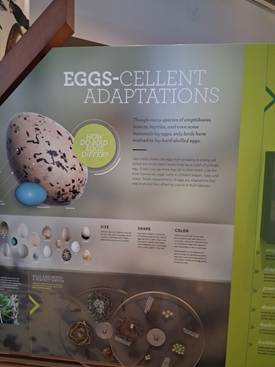

 Daniel's Derekh